4 Days Left! Time to Go to Camp!

Participant 2016 - Web Banner

Are you signed up for Camp NaNoWriMo? There’s still time!

I’m super thrilled about my project this go around. I will NOT be completely winging it like I did in November (because Cover Up is a MESS), plus I’m getting in some good therapeutic writing.
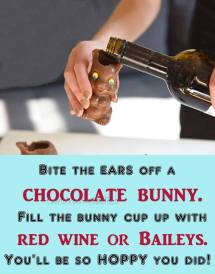
72387_10154021204002641_3686270217819729306_n.jpgThankfully, since the day I somewhat angrily came up with this brilliant idea for a novel, things are sooo much calmer. My wine consumption has returned to normal (like I did NOT try to drink red wine out of a chocolate easter bunny like the Internet suggested – even though I had both a hollow chocolate bunny AND a bottle of red wine at home).

<—-

We’re super focused on saving money now and trying to figure out what the next step is career-wise for me. Cue existential crisis, but I had one yesterday so we don’t need to do that again today. Continue reading
Death of the Author (Guest Post)

“What difference does it make who is speaking?”

This is the last sentence Michel Foucault writes in his 1969 essay What is an Author? [Admittedly, he wrote it in French, which makes the title: Qu’est – ce qu’un auteur? and the question: Qu’importe qui parle?. They sound so much cooler and philosophical, don’t you think?]. In this essay, he postulates that literary criticism should not focus on trying to understand the work through analysing the author’s biography in extensive detail (as many critics have done and still continue to do). He calls this “man-and-his-work” criticism. Rather, it should examine the work and its use of “structure, architecture, intrinsic form, and internal relationships”.

Of course, being a philosopher, Foucault then goes into even more detail: ok, let’s focus on the work (oeuvre). What exactly is a ‘work’? What qualifies as ‘work’? If we rummage through piles and piles of Einstein’s notes (if I’m not mistaken, he uses Nietzsche as an example) and find a shopping list scribbled in the corner of a page, do we include that as part of his work?

In contemporary Internet terms: would a blog post by an established writer about their breakfast – with pictures! – be considered part of their work? Continue reading

Questions on My Mind Today

  1. How terrible is it if I go get a chocolate milkshake from Sonic after my dentist appointment today? 
    1. I truly feel I need to reward myself for doing this. It’s been 9ish years (don’t judge me) and I have super terrible anxiety with dentists and people being so close to my face and I’m really trying to stay calm today but it’s getting harder as the hours tick by.
  2. Why is starting a new book/story so hard?
    1. I know exactly where I want it to start, but actually getting it down and not hating it is proving to be a pain. Especially considering that I have this fancy new notebook for I Should’ve Eloped and I just wanted the first chapter to be handwritten, but I’ve already had to rip a page out because I hated the first sentence so much. Maybe I should type it out first until I’m mostly happy, then I can transcribe it? Hm.
  3. Am I ever going to finish this book I started reading?
    1. It was a free ARC from a publisher and I’m pretty sure the review was due last month. It’s not even a bad book. But it’s also not my favorite genre of book. I took it out of my purse and I keep forgetting to put it back. Oh well, I’m sure I can get through a good chunk while I sit in the waiting room at the dentist this afternoon.
  4. Why can’t people arrange work projects ahead of time, instead of springing them on an unsuspecting person all of a sudden? And then taking forever to respond to emails about it?
    1. Grumble grumble work problems.
  5. Why does time go by so fast when you’re not looking forward to something, but it goes sooo slow when you are excited about something?
    1. Did I mention my dental anxiety? Gahhhh.


Happy Monday, friends. I hope yours goes better than mine. I’ll share some news about my Camp novel tomorrow when I’m not pushing my luck with an ulcer. 🙂

A Rose By Any Other Name (Guest Post)

We’ve all been there. Standing in line, either scanning the menu boards to decide what we want or already with “the usual” in mind, waiting to inch up to the cash register and step into the spotlight. Only it doesn’t come when you place your order; it comes when the cashier asks, “Can I get your name?”

There are two things you have to hope for at this point. The first is that your answer won’t be drowned out or distorted by some noise in the background, like a blender roaring to life or a small child knocking something over with a crash. The second is that your parents gave you a name that isn’t about to get mangled.

Some people can walk into Starbucks and walk out again with their actual name spelled correctly in sharpie on the side of their cup. Whenever I’ve said my name is Carol, I’ve been among those people.

My name isn’t Carol. Continue reading

Should You Find a Writing Partner?

Should You Find a Writing Partner-.jpg

Separate from a beta reader, writing partners are there to keep each other honest. Note, I’m not speaking of a co-writer for a project. More like an accountability buddy.

A writing partner should:

  • make sure that their partner is on track with their current writing project
  • offer up advice as necessary
  • beta read/critique work as it gets submitted back and forth
  • chat often: either online or in person
  • be a shoulder to lean on when writing is hard, or when you get another rejection

This partnership should be 100% mutual. Both people should put forth the same amount of effort into helping one another. If one person cares more than the other, only one person benefits (and the partner who doesn’t benefit will be pretty upset).

There’s some pros and cons to consider before beginning the search for a critique partner:

PROS:

  1. With a good partner, you will get great feedback for your WIP.
  2. They will keep you honest, making sure that you’re actually writing something and not just saying you are (nudge, me*).
  3. They are there to support you through thick and thin, success and failure.
  4. Your partnership could very easily turn into a FRIENDship6321dd3a0cee74f410e80d2660859ece.jpg

Continue reading

Top 5 Things I Dislike About Books (Guest Post)

I’m so happy I got a chance to guest blog on blog and I’m sure I’ll be ready for guest posts on my blog too in April because I’m going to have my exams.

So today I decided to do a post about the things that I dislike in books. Of course these things are not that important and nor do they lessen my love for books in any way but still they are there.

Let’s start.

1) Big font for authors and a small one for the title of the book– Okay I’ve observed this on many books. Take for example any Stephen King novel. All of them has his name written so big. I get it that he wants to promote his books by his name and people will buy his books just by seeing his name on the cover but is there really a need to highlight the name so much? I think it gets on my nerves how the cover looks with name so big.


2) All the books in the same series have different heightsThe second most disturbing thing is that the height of the books changes with every sequel. There is no similarity in the whole series and it makes it weird seeing the books on my shelf. I just wish every book to have somewhat same height. It sure seems to be monotonous but in the end it’s a series. Continue reading

A Facebook Milestone (and maybe a giveaway?), Yay!

First, have you liked my Facebook page? If not, you should do it now! 😉 I share my blog posts, pictures we can all relate to, and updates on my writing progress. I TRY to post once a day, but rarely ever more than that.

Check it out here!

But I reached a milestone! As small as it is, it’s super important for Facebook pages. I finally hit 30 likes! (actually 34 now, woo!) 30 likes on your Facebook page means that you can finally see insights, so how many people your post has reached, how many times people have engaged it, etc.

The only problem with this is now I’m super obsessed about my post reach. Like it just sits up in the right corner of my Facebook all day and I can’t help but want that number to get bigger!

SO. Here’s my offer to all.  Continue reading

Camp NaNoWriMo April ’16

YALL.

Don’t ever plan a wedding. If you get engaged, go to the courthouse and get married, and then have a backyard barbecue or something.

The stress of wedding planning has finally made the inevitable happen. We’re postponing our wedding date. I can’t plan a wedding from afar. It’s just so stressful.

And it really just crept up on everyone. We had an 18-month engagement, and we all still somehow managed to put off everything until 4 months before the big day. If you do have a wedding, pro tip: DON’T DO THAT.

Through the midst of making this decision, I decided that I needed to creatively get all of the stress out. Pushing this back by 4-5 months is such a relief, but now I need to put it all down on paper.

HENCE – MY CAMP NANOWRIMO PROJECT

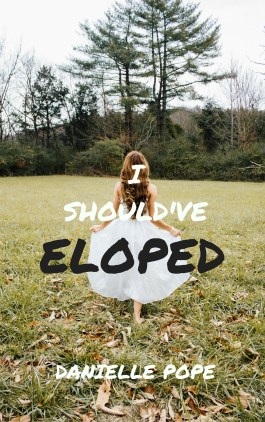
I Should've Gotten Eloped (1).jpg

Here’s the description I wrote on my personal Facebook:

“My next writing project is a creative “non”fiction satire about how terribly I feel about wedding planning. It will be hilarious and sad and hilarious. No promises that I don’t drink wine while writing it too. I’ve drank so much lately.”

We’ve talked about using writing as therapy (and coffee too) and I’m finally going to use it as an outlet for all this craziness.

I don’t have a legit synopsis to share just yet, but I’m working on some planning-type things now so I’ll share that with the world once I’ve figured it out.

Gosh this is going to be a fun one to write.


Here’s a link to my camper profile. Are YOU taking part in Camp NaNoWriMo this year?

A Newbie’s Guide to World Building (Guest Post)

top image.jpg

World Building

The primary purpose of world building is to ground the story in a consistent setting in which your characters live and move. What I’ve tried to do is give some tips and pointers in how to go about the process of world building, starting with making decisions, basics for the process, inspiration, and what not to do. Examples are given from well-followed continuities to make things easier to understand.

Make Decisions

decision making.jpg

Choose a type of world. Make this decision early and confidently, and don’t do a lot of other work until you have. Decide how far into that genre it will be. For instance, if you’re in a magical world, decide if it is Earth Magical (Harry Potter), medieval magical (Tamora Pierce’s Tortall and Emelyn books), or some other type of magical setting. You can combine genres as well, such as the TV show Firefly which is a space western.

Decide how you will make world building decisions. There are different methods and combinations for this. Some decisions are directed by the story’s plot or characters, while others will be made based on a particular species you’re working with. If you’re writing steampunk, it’s usually a good idea to set up a historically-based society, while a story about a starship will automatically put you in space. You can certainly change things about these settings, as Tortall and Emelyn are medieval based stories whose characters often challenge the patriarchal view one often finds there.

Do not dither back and forth when making decisions. Make a choice based on what you know and works for the story. While in some cases you’ll make changes later, most of the time you won’t. You don’t want to be changing every mention of something in an entire novel because you didn’t decide. Continue reading

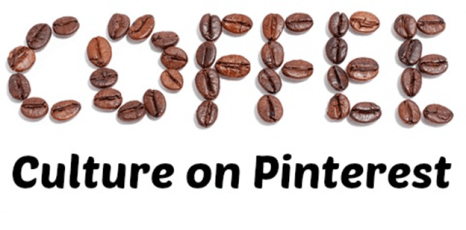
Coffee Culture on Pinterest (Guest Post)

blob.jpg

Let’s start with the basics. What is Pinterest (the short version)? Pinterest is an online platform for creating vision boards or interest boards. Some people call it a visual bookmarking site. You start by creating a profile on the site. Once the profile is in place, you can create “vision” boards on any subject. Now that you have a board in place, you can start “pinning”! A “pin” can be created from a photo, a graphic or anything visual.

You can pin something to a board by uploading a file from your PC or smart phone. You can also pin something interesting you see on a blog or website to one of your boards. For example, let’s say I’m cruising around the internet and find some great photos of Pluto on the NASA website. I can pin the photos to my Pinterest board called “Planets On The Go” or “Dwarf Planets in Space”. I can call the board anything I want.

The thing that gives Pinterest its social appeal is “re-pinning”. You can follow people on Pinterest and see what they’re pinning to their boards. If you see something interesting, you can “re-pin” it to one of your boards. Of course, others can follow what you pin and re-pin to one of their boards as well.

With anything social, as more join in, cultures and sub-cultures start to form. Pinterest is no different. Pinterest tracks patterns among users as they create boards and add pins to those boards. Before long Pinterest will create categories and sub-categories for a subject as more people pin about it. Pinterest has 70 million users worldwide so new  categories and sub-categories are created daily.

Continue reading