Three Kinds of Writing Books Every Writer Should Read, Part 2 (Guest Post)

Part 2: The Art of Writing

It’s sad but true: you can craft grammatically perfect prose, turn a nice phrase, and even come up with an insightful metaphor or two—and still write forgettable fiction. How many books feature the same stock characters and predictable plots? Or worse: unbelievable characters and clunky, hole-ridden plots? So, if you’re going to write, if you’re going to pour your time, your energy, your life into a world that doesn’t even actually exist—if you’re willing to do all that—why not make your writing the best it can possibly be?

In my last post, I featured a wonderful little book on the craft of writing, The Elements of Eloquence. It drills down deep into phrases, sentences, and rhetoric. Today, we look at the second kind of book that should be a part of every writer’s reading diet: a book on the art of writing, because writing is more than craft.

That’s right: as writers, we need to do more than just study the craft, we need to catch a vision of what great writing can be. In The Art of Fiction, John Gardner gives us exactly that. Continue reading

A Blogger’s Journey: What I Learned Joining Blogging Groups on Facebook (Guest Post)


By Brent Jackson

blob (1).jpg

I’ve been blogging on and off for nearly 10 years. I start a blog and I’m off to the races. I have high energy at the start. I have lots of ideas for posts. It all seems easy. I can look down the road and imagine a thriving community around my blog and all is good.

Well that’s how it always starts. Then reality sets in. The energy starts to drop after a few weeks. The ideas for new posts don’t flow as quickly. Before I know it … dead blog. I was getting to the point that I could picture an imaginary graveyard with little gravestones for each of my past blogs.

I finally broke the pattern! My current blog is a year old next month (May 2016). That’s far longer than any of my past blogs. My energy level is still high (with a little help from coffee). I actually have a backlog of ideas to write about. Scheduling travel and taking time for research is my biggest challenges this cycle. I guess that’s the benefit of finding a subject I’m passionate about. I’m confident this blog is going the distance. Continue reading

Writing About Your Life

writingaboutyour life.jpg

(I’m not writing an one, but) I’m not quite sure I understand how people can write autobiographies about their life (probably redundant, but whatever).

Like how do you know what’s important? What people care about? What “scenes” from the days you were on Earth move along some sort of narrative that you’ve felt was important enough to share with everyone?

I’m having a hard time with my Camp novel this month. I mean, I wrote the first 149 words (milestone, woo!) and now I’m having a hard time writing the next batch of them. I did some very minor planning: a very basic list of important events that should probably be covered, but then I wonder if maybe some of them aren’t really integral to the storyline.  Continue reading

Three Kinds of Writing Books Every Writer Should Read, Part 1 (Guest Post)

Part 1: The Craft of Writing

What’s the most important rule of writing a novel? Get your butt in the chair and write. Got that? Good. But what’s next? What will take you from hack to Hemingway? Here’s an idea: read.

Read the kinds of things you want to write, of course. Then read things that aren’t like what you want to write. Read classics. Read poetry. (I’ve heard that Ray Bradbury read poetry every day. Reading his work, I believe it.)

But if you really want to write, then make sure you read books about how to write, and how to be a writer. And then read them again. While there’s no shortage of writing advice out there on the internet, do yourself—and your readers—a favor and dig a little deeper. Make these three kinds of writing books a part of your regular reading diet:

  • A book about the craft of writing.
  • A book about the art of writing.
  • A book about the life of writing.

Without a doubt, there are no shortage of books that fit the bill. In this series of three articles, I’ll introduce my go-to picks for each of these three necessary books. Today, a look at one on the craft of writing. In following posts I’ll take a look at the the art of writing and life of writing.


Continue reading

4 Days Left! Time to Go to Camp!

Participant 2016 - Web Banner

Are you signed up for Camp NaNoWriMo? There’s still time!

I’m super thrilled about my project this go around. I will NOT be completely winging it like I did in November (because Cover Up is a MESS), plus I’m getting in some good therapeutic writing.

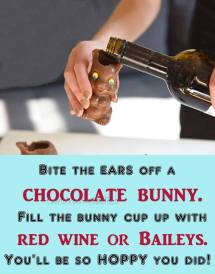
72387_10154021204002641_3686270217819729306_n.jpgThankfully, since the day I somewhat angrily came up with this brilliant idea for a novel, things are sooo much calmer. My wine consumption has returned to normal (like I did NOT try to drink red wine out of a chocolate easter bunny like the Internet suggested – even though I had both a hollow chocolate bunny AND a bottle of red wine at home).
<—-

We’re super focused on saving money now and trying to figure out what the next step is career-wise for me. Cue existential crisis, but I had one yesterday so we don’t need to do that again today. Continue reading

Should You Find a Writing Partner?

Should You Find a Writing Partner-.jpg

Separate from a beta reader, writing partners are there to keep each other honest. Note, I’m not speaking of a co-writer for a project. More like an accountability buddy.

A writing partner should:

  • make sure that their partner is on track with their current writing project
  • offer up advice as necessary
  • beta read/critique work as it gets submitted back and forth
  • chat often: either online or in person
  • be a shoulder to lean on when writing is hard, or when you get another rejection

This partnership should be 100% mutual. Both people should put forth the same amount of effort into helping one another. If one person cares more than the other, only one person benefits (and the partner who doesn’t benefit will be pretty upset).

There’s some pros and cons to consider before beginning the search for a critique partner:

PROS:

  1. With a good partner, you will get great feedback for your WIP.
  2. They will keep you honest, making sure that you’re actually writing something and not just saying you are (nudge, me*).
  3. They are there to support you through thick and thin, success and failure.
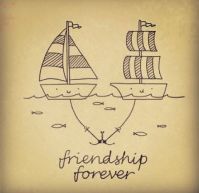
  4. Your partnership could very easily turn into a FRIENDship6321dd3a0cee74f410e80d2660859ece.jpg

Continue reading

Top 5 Things I Dislike About Books (Guest Post)

I’m so happy I got a chance to guest blog on blog and I’m sure I’ll be ready for guest posts on my blog too in April because I’m going to have my exams.

So today I decided to do a post about the things that I dislike in books. Of course these things are not that important and nor do they lessen my love for books in any way but still they are there.

Let’s start.

1) Big font for authors and a small one for the title of the book– Okay I’ve observed this on many books. Take for example any Stephen King novel. All of them has his name written so big. I get it that he wants to promote his books by his name and people will buy his books just by seeing his name on the cover but is there really a need to highlight the name so much? I think it gets on my nerves how the cover looks with name so big.


2) All the books in the same series have different heightsThe second most disturbing thing is that the height of the books changes with every sequel. There is no similarity in the whole series and it makes it weird seeing the books on my shelf. I just wish every book to have somewhat same height. It sure seems to be monotonous but in the end it’s a series. Continue reading

Camp NaNoWriMo April ’16

YALL.

Don’t ever plan a wedding. If you get engaged, go to the courthouse and get married, and then have a backyard barbecue or something.

The stress of wedding planning has finally made the inevitable happen. We’re postponing our wedding date. I can’t plan a wedding from afar. It’s just so stressful.

And it really just crept up on everyone. We had an 18-month engagement, and we all still somehow managed to put off everything until 4 months before the big day. If you do have a wedding, pro tip: DON’T DO THAT.

Through the midst of making this decision, I decided that I needed to creatively get all of the stress out. Pushing this back by 4-5 months is such a relief, but now I need to put it all down on paper.

HENCE – MY CAMP NANOWRIMO PROJECT

I Should've Gotten Eloped (1).jpg

Here’s the description I wrote on my personal Facebook:

“My next writing project is a creative “non”fiction satire about how terribly I feel about wedding planning. It will be hilarious and sad and hilarious. No promises that I don’t drink wine while writing it too. I’ve drank so much lately.”

We’ve talked about using writing as therapy (and coffee too) and I’m finally going to use it as an outlet for all this craziness.

I don’t have a legit synopsis to share just yet, but I’m working on some planning-type things now so I’ll share that with the world once I’ve figured it out.

Gosh this is going to be a fun one to write.


Here’s a link to my camper profile. Are YOU taking part in Camp NaNoWriMo this year?

A Newbie’s Guide to World Building (Guest Post)

top image.jpg

World Building

The primary purpose of world building is to ground the story in a consistent setting in which your characters live and move. What I’ve tried to do is give some tips and pointers in how to go about the process of world building, starting with making decisions, basics for the process, inspiration, and what not to do. Examples are given from well-followed continuities to make things easier to understand.

Make Decisions

decision making.jpg

Choose a type of world. Make this decision early and confidently, and don’t do a lot of other work until you have. Decide how far into that genre it will be. For instance, if you’re in a magical world, decide if it is Earth Magical (Harry Potter), medieval magical (Tamora Pierce’s Tortall and Emelyn books), or some other type of magical setting. You can combine genres as well, such as the TV show Firefly which is a space western.

Decide how you will make world building decisions. There are different methods and combinations for this. Some decisions are directed by the story’s plot or characters, while others will be made based on a particular species you’re working with. If you’re writing steampunk, it’s usually a good idea to set up a historically-based society, while a story about a starship will automatically put you in space. You can certainly change things about these settings, as Tortall and Emelyn are medieval based stories whose characters often challenge the patriarchal view one often finds there.

Do not dither back and forth when making decisions. Make a choice based on what you know and works for the story. While in some cases you’ll make changes later, most of the time you won’t. You don’t want to be changing every mention of something in an entire novel because you didn’t decide. Continue reading

What’s Better? The Book or the Movie?

Movie Book.jpg

A huge source of debate among avid readers is whether the book is better than the movie, or the movie is better than the book.

I didn’t start really engaging in these debates until I was finally able to read/watch Harry Potter. It wasn’t until 2010 that I got to finally sit down and read the series from start to finish. There were 6 movies out at the time I started reading them, and I vowed to read every single book before watching any of the movies.

I finished them all, and then we binged the first 6 movies JUST in time to hit up the midnight release of Deathly Hallows pt. 1.

Naturally, the book fresh in my memory still, I couldn’t help but compare the two against each other. And like most people, at first, this was how I felt.

Probably didn’t help that it was only part one, but eh

Continue reading